Stop-the-Violence Search Engine

Custom Search

This Blog's Guiding Maxim:-

"The person who shies at the possibility of increased responsibilities or at the prospect of future uncertainties is hardly worthy of life itself, for life consists of uncertainties, problems and challenges of various types."

Check out the Site:

Under the Same Sun - A site out to fight the cause of the Albinos

Share!

Contact Me:

You can contact the blog editor through this e-mail address: (ritchmbuthia at gmail dot com)

Sunday, February 7, 2010

Two caught selling albino body parts

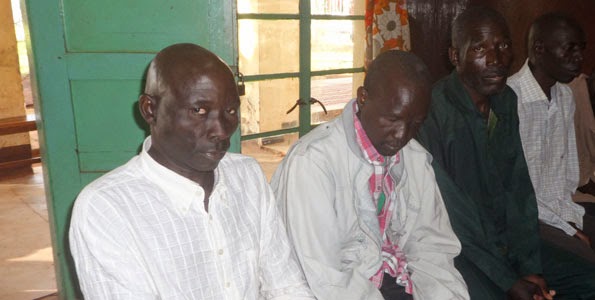
POLICE in Kagera Region have arrested two people who were allegedly looking for a customer of albino body parts.

Kagera Regional Police Commander (RPC) Henry Salewi told reports in Bukoba that the suspects were arrested with the human body parts....

''The suspects were arrested on Wednesday (February 3). The arrest was made after police got a tip that two residents of Ngara were looking for someone to buy albino body parts"...


...there is an international
criminal network involving suspects in Tanzania and neighbouring Burundi...


Read the Rest Here

Wednesday, February 3, 2010

ALBINO KILLINGS: Obama asked to put pressure on Kikwete

Mariamu Stanford talking to a journalist

An American Congressman wants President Barack Obama to put diplomatic pressure on the Kikwete Government to end the albino killings in parts of the country...

The American politician is using the opportunity to raise international attention on the menace in Tanzania, in which over 50 albinos have been killed in the last four years in an orgy fuelled by witchcraft-related beliefs. Some 28 albinos were slaughtered in 2008 alone, according to official government figures...

During her stay in the US, Mariamu and fellow albinos from Northern Virginia met with Mr Connolly, who pledged to introduce a House Resolution, condemning the attacks on people with albinism in East Africa, and to work with American and Tanzanian government officials to stop the killings.

Mariamu travelled to the US last December for two weeks and was fitted with artificial arms donated by Mr Elliot Weintrob of Orthotic Prosthetic Centre in Fairfax, Virginia, and she also underwent intensive physical therapy.

She also met Ms Susan DuBois, who has since formed an organisation in her name and dedicated it to ending the slaughter of people with albinism in East Africa.

The "Asante Mariam" organisation launched in Virginia last week will campaign to increase awareness of the immediate and long-term threats to albinos East Africa.

"As a mother of two children with albinism, I was deeply shaken when I first heard about the killings in Tanzania," said Ms DuBois, the founder and executive director of "Asante Mariamu."


Read the Rest of the ARTICLE HERE

Read Also


Read how this blog first told the Mariam Stanford tragedy

Monday, February 1, 2010

In My Genes [Trailer]

Documentary by Lupita Nyong'o

IN MY GENES Trailer from Lupita Nyong'o on Vimeo.

Life, for Mariam Stanford, will never be the same again

Story courtesy of The Guardian on Sunday (31st January, 2010)
The 28-year-old woman whose hands were chopped off in a gruesome albino attack in October 2008 is currently in the United States undergoing treatment to receive prosthetic arms.

Mariam Stanford has suffered tremendous strife since thugs left her for dead in her home in Ntubeye village, Ngara district, and made off with her hands, presumably to sell on the black market to those who believe albino body parts bring good luck.

The most basic daily activities that most take for granted are now arduous procedures for Stanford, requiring tremendous patience and poise.

For example, to make a phone call, she slowly places her lips to her cell phone like someone preparing to kiss a lover, and she then dials the number using her mouth before maneuvering the phone to her ears to listen.

Stanford, the mother of a 3-year-old son, now depends on her mother for help doing most things around the house, she said in a recent interview.

"I can't feed myself, I can't wash myself, can't cook or farm,” she said, glancing at the remains of hands. "My life will never be the same again.”

Although Stanford was suffering when she spoke with The Guardian on Sunday just a couple of months ago, a ‘good Samaritan’ flew her to the United States in early December to receive treatment and prosthetic arms, she said. She is expected to return to Tanzania early next month with fully functional mechanical hands.

But no amount of medical treatment will erase the memory of Stanford’s attack that night, on October 18, 2008. Stanford, who was three months pregnant at the time, had eaten dinner with her family before wishing them a good night like any other nights, but little did she know that one of her neighbours was planning to kill her that night.

“What pains me more is that the very same neighbour who has lived near me for years is the one who did this to me,” Stanford said. “Though as a Christian I am taught to forgive seven times seventy, whenever I look at my chopped hands, it becomes very hard for me to forgive those who attacked me. Hopefully God will judge them one day in heaven.”

Though she had been horrified by the killings of albinos that had been escalating in Tanzania's Lake Victoria region, Stanford had never imagined that her neighbour whom she had known for two decades, would see her body as a source of profit.

In her tiny grass-roofed and mud-built house, Stanford locked the doors and went to bed with her two younger sisters and her son, expecting to wake up safely in the morning ready to continue with daily activities.

But on that day her name was on the killers' list who were promised Shs 6 million ($4400) if they could manage to get away with Stanford’s body organs.

"It was around 1am or midnight when I heard people knocking roughly on my door, before they managed to get inside my house," she recalled.

"I tried to cry for help but suddenly my eyes met a sharp torch's light...I saw my neighbour holding a bush knife which he used to attack me."

"He cut my left hand — I cried for help but fell down on the floor before he cut my right hand," Stanford said. “I saw my death coming...I tried to shout loudly for my parents, but no one came."

"I didn't know that when my attacker entered my room, the others had surrounded my parents' house to ensure that nobody came to help me," she said.

After the killers left with Stanford’s hands, her parents finally rushed into her house ready to help, but they were shocked to find her lying in a pool of her own blood.

"I told them that I know my attacker...he is our neighbour," she said. "My parents quickly went to his home and found this man trembling with fresh blood stains on his clothes...they arrested and beat him but he declined to disclose who his accomplices were."

It took nearly five hours to get Stanford to the nearby hospital for treatment. She suffered a miscarriage because of the ordeal.

“That’s how I escaped from hell,” she said as she finished her harrowing account, adding that she is disappointed that over a year since she was attacked the suspects are yet to be convicted. The albino attacks may have stopped recently, but the devastation they have caused still haunts hundreds of victims and their families.

Stanford’s biggest fear is that some of the suspects, who are currently out of jail, may return to kill her before they stand to testify in court in the next few months.

“These are very powerful people who have money…I still fear that they might come after me one day,” she said. “Look at where I live right now, there’s nothing that can stop them from reaching me except God…I have left everything to God.”

Saturday, January 23, 2010

Anyone out there?

There are times I feel like a lone ranger when I am doing this blog. Why? You may ask. I think it is the feeling that there is very little that seems to be done about the prejudices people have of albinos.

It is a crazy feeling altogether, but I guess I am speaking my mind when I say this. People seem not to care about what our brothers and sisters, the albinos, are going through in Tanzania.

I would expect people to have changed by now, but the animosity continues and as someone rightly said: “It is not over until it is over.” I think that is true judging from what is happening on the ground.

Being a teacher, I meet with different people. People with different perspectives; people with different ways of looking at things. And, sometimes, I feel helpless when the children I teach tell me things that they were told by their parents about albinos.

And I can assure you that most of the stuff that children are told by their parents is not good. They are told to hate albinos; to look down upon them and to call them names.

In fact, some of them admitted to me that they wouldn’t be comfortable if their parents knew that they had talked to someone about what they were told.

Is there anyone out there who can talk sense to such parents, parents who "wreck" their children’s lives by poisoning them with the drivel that albinos are to be avoided like the plague. Please someone drum some sense into such people.

Is there really anyone out there?

Thursday, January 21, 2010

Help needed: School struggles to educate Albino children

Some of the pupils at Mitindo Primary School in Misungwi District, Mwanza Region


The school needs special textbooks for blind pupils and those with impaired vision due to albinism. Mr Hirani says that there was need for increased campaign locally to encourage people support less fortunate members of the society, including albino children. Albinos need hats and sunglasses to protect them from the sun. They also need lotion to avoid damage of their delicate skin.


People can effectively support albino youths upon proper mobilisation. There are reports that the nation is currently spending up to 90bn/- annually on weddings and other profligate activities.


AT the age of 16 years, Richard Feruzi, a boy from Ilemela District in Mwanza Region, dreams of being a politician cum human rights activist.

Richard, is an albino and in Standard Seven at Mitindo Primary School in Misungwi District, some 40kms south of Mwanza city.

He has already composed dozens of songs in condemnation of perpetrators of killings of albinos and several others in praise of the leadership of the country.

"I can play a big role in global campaigns against discrimination in whatever its form, as well as promotion of peace and love," says Richard, who has been a pupil at Mitindo since 2004.

He says that the Prime Minister, Mr Mizengo Pinda and the National Assembly Speaker, Mr Samuel Sitta, were among the people whom have inspired him to become a politician.

Richard is one of 105 pupils with albinism at Mitindo special centre in Misungwi district, which was initially established in 1956 as a middle school before becoming an upper primary school in 1967.

Mitindo Primary School Head teacher, Mr Juma Abdallah, says it introduced vocational training in 1975, some three years later it started to admit blind pupils and in 1989 began to enrol those with albinism.

Mr Abdallah adds recently that the school was currently having a total of 1,134 pupils, out of them 86 in pre-school classes and six on vocational training programmes like masonry and carpentry.

He says out of 147 disabled pupils, 42 were blind and the rest were those with albinism. The headmaster lists several challenges faced by the school including the influx of pupils during the last three years, following increased killings of albinos, since many parents brought their children to the centre for security purposes....

WORD FOR JOURNALISTS...
Can the media investigate this place and make the public know about its authenticity. The only person who has pursued Shilinde story is Vicky Ntetema of the BBC, but unfortunately the Tanzanian media has not seen Vicky as a hero, and thus collaborate with her in the fight against albino killings.


Vicky went to Magu where she was told that the Gambusi Kuzimu had vanished many years ago, but if she wanted to see it, the heavies in the witchcraft could give her some medicine which will lead her into the village which Shilinde who wants to be called Daniel now says they have all professionals, all means of transport and everything you would find in a modern city.

The task of Tanzanian journalists is to find the witchdoctors who are peddling albino killings and not looking for the city of wizardry.
Read the Rest Here

Thursday, January 14, 2010

Religious denominations condemn albino murders

Islamic and Christian denominations within the country have strongly condemned murders of albinos and the elderly. They said people who perpetrate such killings are sick in the head and want them to stop such notions immediately.

From discussion yesterday in Dar es Salaam in the conference organised by Muslim and Christian followers, leaders of these religions joined together in declaring cooperation with the Government in fighting the war against these murders.

At this conference, Evangelist Moses Ndimbo from the Evangelists Fellowship of Tanzania, said there is no short-cut to becoming wealthy and that the only way to accumulate wealth is to work hard: there is no other way.

He said the act of traditional healers deceiving citizens that they will gain wealth by killing albinos and the elderly is unacceptable because there is no truth at all that success follows from killing a person.

“I request the Government to cancel all permits and boards of traditional healers and ban the display of such boards, which motivate citizens to go to the healer,” he said.
For his part, Dr. Sule Seif from the National Muslim Council of Tanzania (BAKWATA), was astonished to see people believing superstitious beliefs in this century of science and technology.

He said Muslims and Christians will work together to eliminate these acts and have prepared strategies to go throughout the whole country educating citizens about what God says about murder and murderers.

On giving a word of thanks, Treasurer of the Albino Association of Tanzania, Abdilah Abdular, congratulated these efforts and asked religious leaders to preach especially in village areas unreached by religion.

“Many healers have no religion and that’s why they are able to advise such brutality, I ask religious leaders to reach village areas where many of them are so they can know God.” he said.

Monday, January 4, 2010

District Commissioner orders a count of all albinos

Translated from Nipashe Newspaper by Jean Burke

The district commissioner of Lindi, Magalula Said Magalula, has directed division and ward officers to list the number of all albino people, with the aim of enabling the government to plan strategies to protect their safety.

Magalula gave this instruction, when opening the meeting of the Lindi district advisory committee, conducted in the council hall of Lindi village, on 23rd December last year.

He said, due to the brutal acts carried out against albinos, there is a need for district leadership to have accurate statistics, including understanding where albinos live, and the parents, relatives and neighbours who live with them.

Magalula stated the purpose in carrying out this census, apart from knowing their situation with regards to security, is a result of suspicions that some parents, relatives and neighbours cooperate with murderers in killing albinos out of greed for money.

He said that having a complete register available will help this government district one way or another, to know where albinos live, the security of their situation and to see how the government can assist their protection or when they encounter problems.

Since the wave of albino murders has erupted in the country, the death of one albino has taken place in Lindi district. The body was found floating in Lukuledi river one year ago.

Lindi Region, is estimated to have more than 700,000 residents, and it is claimed to have more than 170 albinos.

Wednesday, December 2, 2009

Expose those behind albino murders, Tanzania urged


* MP says politicians use witchdoctors

* Warns albino killings will increase ahead of elections

* High Court says two trials have been stopped


Rights campaigners say Tanzania must lift a shroud of secrecy surrounding wealthy buyers who commission albino killings for witchcraft, after one lawmaker admitted many politicians use witchdoctors themselves...Click Here to Read the Rest

Tanzanian albinos shelter in terror from killers

In remote northwest Tanzania, two parents sob for their 10-year-old albino son, who was beheaded to stop him screaming by men who then hacked off his leg in front of his father.

The family had previously tried to have their boy registered at a school where many albinos shelter but he was refused entry because it was full...Click Here to Read the Rest

Monday, November 23, 2009

Get to know How you can send donations to Albinos in Tanzania

Check out the following link for information on how and where to send donations to Albinos in Tanzania:
Want to send donations to Albinos in Tanzania? Here's how

Donor and delegation kept waiting at school

Canadian philanthropist Peter Ash, who is an albino, smears sunscreen lotion on the hands of a pupil at Mitindo Primary School in Misungwi District, Mwanza Region, on Saturday. Pastor Ash was kept waiting outside the school for over two hours before he was finally let in

Canadian donor was at the weekend temporarily barred from visiting a primary school in Misungwi District in Mwanza Region.

Mr Peter Ash and his delegation and several local and foreign journalists were stopped at the gate of Mitindo Primary School, which has over 100 pupils with albinism.

The visitors were only allowed in after speaking on the phone with Mwanza Regional Commissioner Abbas Kandoro, over two hours after arriving at the school...Read the Rest Here

Missing link in Albino killings

Story courtesy of The Guardian Newspaper Tanzania

"...the only missing link in the pyramid of albino killers is the rich man who looks for albino human parts"


A Canadian-based human rights group has questioned Tanzania's commitment to stop albino killings for failing to name the forces behind the macabre acts.

Peter Ash, President and founder of a Canadian-based NGO observed here on Friday that the only missing link in the pyramid of albino killers is the rich man who looks for albino human parts.

“So far, it is traditional healers and killers that have been named and brought to justice. We want the consumers, the rich that can afford million of shillings to be named” said Ash.

Ash was addressing an International Press Conference at Nyawilimwa village after laying a wreath on the grave of a ten-year child Gasper Elkana, who was brutally murdered and his leg chopped off at Geita District, Mwanza Region by unidentified assailants.

Gasper, who had gone out for a short-call escorted by his father at around 20 hours on the night of October 23, 2009, was slashed by a machete and when his guarding father made an attempt to help him, he too was hit on the head and wounded seriously.

“I read about Gasper’s death with profound shock and imagined the calamity as having struck my family, because this family and mine have so many things in common. The age of Elkana Gasper’s father and I tally and so do the late and my son’s, ” he said.

At least 54 Tanzanian albinos have been murdered since 2007, with most of the killings taking place in the remote northwest regions of Shinyanga and Mwanza, where superstition runs deep.

The High Court, sitting in Shinyanga municipality to preside over cases involving albino killings, delivered its first judgement in September where it convicted and sentenced to death three accused persons.

Reading the ruling, which lasted about an hour, High Court Judge Gabriel Rwakibalila said the court was satisfied that the evidence tendered by the prosecution side proved beyond reasonable doubt that three of the convicts were involved in the killings of the ablbino.

The same court early this month, delivered its second judgment by convicting and sentencing to death by hanging four accused persons.

The immediate reaction to the ruling by some sections was to dismiss it as a non-starter. However, it restored the trust of many people in the country’s judicial system. Meanwhile, chairman of Tanzania Albino Society (TAS) Mwanza Region Alfred Kapole wants the government to speed up the pending albino cases.

He expressed disappointment that the cases have stalled for the second time for lack of funds.

Albinos lack pigment in their eyes, skin or hair, making their life difficult in Africa where there is plenty of sunshine and they are more susceptible to skin cancer and sunburn.

Sunday, November 22, 2009

Impassioned Plea: Please reduce the Red Tape!

I watched on TV the almost insurmountable red tape that Peter Ash had to contend with the other day when he went to deliver donations to a school that has albino children in Misungwi district in Mwanza.

His entourage was locked out and it seems there were express orders from high up not to allow them to get in and deliver the donations.

When Mwanza Regional Commissioner, Abbas Kandoro, heard what had happened, he called the officials on the ground at the school and asked them to allow the donations to be delivered.

We at this blog ask: Must this red tape persist?

The officials on the ground know that the albinos at the school, and in other parts of the country, are in dire need of some things that would make life a bit bearable for them. Why, then, should there be opposition when someone finds it in his heart to donate such things to them?

Furthermore, Peter Ash, being an albino, knows what his brothers and sisters, the albinos, need. Thus, his gesture of donating to them should be received with open arms.

Our advice: Guys, please reduce the red tape!.

Saturday, November 7, 2009

Albino killings and the death sentence: All murder cases are not equal, are they?

Story courtesy of The Guardian newspaper Tanzania (7/11/2009)

By Ani Jozen

Rapid convictions and sentencing of suspects of albino killings in Shinyanga region have put activists for the abolishment of the death penalty on a tight spot, as society generally was gratified that their hanging would send a solid message to other hunters of albinos’ organs.

The death penalty abolition lobby, at pains to change societal attitudes which are overly uninterested in making criminals better people and prefer to get them out of the way, and where relevant by death, are rushing in. This is vital.

The question is vital because if society will be convinced of the futility of hanging those convicted of involvement in killings of skin-disabled people, the most grotesque spate of criminality the country has seen for a while yet, they will have succeeded in discrediting the death penalty itself.

If it is possible to spare albino killings convicts of their carrying out of their sentences, then it is potentially likely that it will be possible to seek formal halting of application of such sentencing. So far it’s a private decision.

No such moratorium (freezing) has been declared on application of death penalties, but the president just hasn’t felt it proper to sign any of the pending sentences.

Activists insist that so long as no such sentences has been applied in the past 16 years, then none will be applied, in which case it is proper to affirm the irrelevance of the sentences in the pursuit either of justice or of alleviating criminality by correcting offenders. Yet it is clear that when issues of death sentence arise, correction is not an option.

The principal argument about the application of the death sentence is that error can’t be ruled out 100 per cent in any conviction, and that unconsidered evidence could arise in future to invalidate the view that the convict was sufficiently responsible for that event.

If the sentence would have been carried out already, the damage is irreparable, so it is better that presumably correctly sentenced people should live than wrongly sentenced people put to death, even if that is rare. No wrongful death is too rare to count.

It isn’t surprising that the sentencing of convicts of albino killings brings out activists against the death penalty, as if they don’t combat this particular spate of convictions – which have a high likelihood of being carried out – they lose the battle altogether.

They don’t intend to create a ‘Kafkaesque’ situation or say one that is close to Animal Farm, the harrowing contradiction of ‘no animal shall sleep on a bed – with sheets.’ They would have to adapt their slogan to ‘abolish the penalty, except for albino killers.’

Yet this is precisely what is refreshing about the debate, as to whether it is of any use at the moment to tell society that even those who hack innocent people for selling of their body parts should be retained in this or that prison.

And especially if the issue is that they will change and become better people, it is hard to see how that becomes convincing to the breadth of society – that they will not be wishing to earn a million shillings for several albino body parts. There is acute need for deterrence as the moment.

The judiciary and the government at a wider level are still smarting from a tormenting somersault on the traders and taxi driver killings by police officers. Letting the albino murderers would send a signal to others that all they risk is eating unbalanced diet in jail, and they retain a chance of being loose again, since ‘where there is life there is hope.’ It would mean that the government passes up a good opportunity for showing to the world it intends to ameliorate its shattered image, from albino killings.

Activists will be confronted with this consideration, since it is far more positive for the government to rectify the country’s image about injustice to albinos than worrying about justice or presumed right to life of their convicted killers.

At times those convicted faced hostile evidence from their own wives as to how they went about seeking out or grabbing the children they hacked to death, a line of evidence no future ‘fact’ can unsettle as to guilt on that account. There are few ‘rare’ facts that are likely here.

One could of course be accused of being simplistic as to whether any case in law is completely closed such that no fact could be unearthed in future to unsettle it.

The response however may not be that far off, as this is also covered by democracy, that elected officials, when acting fairly and receiving clear and distinctive legal advice on a particular case, can examine each case on its own merit. For instance if a conviction includes corroborating evidence by those who are close to the convict, it is deemed safe.

When however one has been convicted entirely on the basis of evidence adduced in court by strangers, and close ones like wife or siblings remained deeply skeptical of that evidence, such person may be placed in life imprisonment but no execution take place.

Just as there can’t be a blanket fear of new and unsettling evidence, so also is it necessary not to rule out such evidence simply because the issue is albino killings. If a proper rule of thumb is placed on that specific detail no miscarriage of law is likely.

That also means it is hard to defend the ‘no death penalty’ maxim in a blanket manner, unless it was presumed that no crime merits suffering death as punishment.

This too is covered in law and would tend to place albino killings at a different level from murder generally, as the latter is quite often tied to conflict, and at times in situations where the assailant was also in danger, and yet the law qualifies such conviction for the death penalty.

That could of course be commuted to life imprisonment, but when a man has cynically, even in the testimony of his wife, gone about harvesting body parts with a panga, the rest of us can be forgiven for not treating him on a par with human beings. He wouldn’t deserve it.

Thursday, November 5, 2009

Albino killings: Govt to `smoke out` all suspects

Snapshots

Several other legislators also contributed to debate on the matter, saying the killings had tarnished Tanzania’s image to the extent that the country was now considered insensitive to human rights or incapable of guaranteeing the safety of some of its people.

Others recommended that court proceedings be accelerated and convicts be punished without delay since those who had their loved ones so brutally killed had begun questioning the government’s capacity to deal with serious crime.

.................... ........................
Story courtesy of The Guardian newspaper Tanzania

The government has vowed to “smoke out of their hideouts” all people suspected of murdering, maiming, intimidating or harassing albinos for whatever reason.

It has also announced that it will do all that is in power to “sever once and for all the alliance between these evil-minded people and the witchdoctors misleading them into committing the crimes”.

The promise comes from Home Affairs deputy minister Khamis Kagasheki, who told the National Assembly here yesterday that nine of the 90 albino killer suspects currently in custody are traditional healers.

Responding to a question by Special Seat legislator Maria Hewa, who demanded clarification from the government on the number of people arrested so far in connection with albino killings, Kagasheki said police had taken “aggressive measures” and held a number of suspects.

“Between June 2007 and March 2009, a total of 90 suspects had already been put in custody and brought to justice,” he said.

He added: “Investigations are continuing on 17 cases in the Lake Victoria zone, nine cases are pending in the High Court, two have already been decided and seven accused have been convicted and sentenced to death in Shinyanga Region. Four accused were found guilty as recently as Monday this week and sentenced to death.”

In a supplementary question, the legislator called on the government to make sure that all suspected albino killers were taken “to where they belong (custody) alongside their acquaintances pretending to be traditional healers”.

Several other legislators also contributed to debate on the matter, saying the killings had tarnished Tanzania’s image to the extent that the country was now considered insensitive to human rights or incapable of guaranteeing the safety of some of its people.

Others recommended that court proceedings be accelerated and convicts be punished without delay since those who had their loved ones so brutally killed had begun questioning the government’s capacity to deal with serious crime.

Can the death sentence deter Albino killings?

“Hangings cannot put albino killings to an end. The death penalty is not reliable enough as a solution. We need to think of better and more definitive ways out”

“Even after the first group of people suspected of murdering albinos was sentenced to death by hanging, there was no improvement in the situation. There was no noticeable change in people’s behaviour. Instead, more and more albinos were murdered in Geita and several other parts of the Lake Victoria zone”

`Battle` Over Death Penalty Once More

Story courtesy of The Guardian newspaper Tanzania

Physical protection is a much better way of ensuring the safety of albinos than sentencing to death people behind their killings, human rights activists have insisted.

Harold Sungusia, public engagement coordinator with the Dar es Salaam-based Legal and Human Rights Centre (LHRC), said in an interview with this paper on Tuesday that there was no country where capital punishment had served as an effective enough deterrent to homicide.

He was speaking in the recent sentencing to death by the High Court of several people found guilty of killing albinos.

“Even after the first group of people suspected of murdering albinos was sentenced to death by hanging, there was no improvement in the situation. There was no noticeable change in people’s behaviour. Instead, more and more albinos were murdered in Geita and several other parts of the Lake Victoria zone,” he said.

He added: “That was enough proof that the death penalty is not a lasting solution and that it does not scare anyone into treating albinos as normal humans.”

Sungusia, a lawyer, said capital punishment fell short on three counts as a deterrent – “changing offenders into good law-abiding people, ensuring that one does not relapse into crime, and ensuring that convicts rejoin their communities rehabilitated on completion of their punishment.

He noted that some people were sentenced to death for crimes they had not committed and that it was “simply not practicable” for people hanged after being convicted to enjoy their rights should evidence absolving them be made available after they are hanged.

“Hangings cannot put albino killings to an end. The death penalty is not reliable enough as a solution. We need to think of better and more definitive ways out,” he added.

But Sungusia stated that Tanzanian laws gave the courts the power to sentence albino killers and all other murderers to death.

“Even if the President decides to sign warrants effectively sanctioning the hanging of murder convicts, he would be perfectly right because that is provided for by our laws,” he pointed out.

He elaborated: “The problem lies in the laws we have. Some are so hopelessly outdated and therefore so bad that they call for urgent amendment or scrapping,” he said, adding that there was also “an urgent need to shift from criminology to victimology in order to restore justice in the society”.

LHRC director Francis Kiwanga similarly noted that the nation has failed to arrest the killings of albinos and that the death penalty has not been implemented in Tanzania in the last 16 or so years.

“The failure to actually hang murder convicts to death for this long means that there is no need to continue embracing the death sentence. Rather, we should concentrate on ways of controlling the killings of albinos,” he added.

But law professor Abdallah Safari trashed suggestions that the death penalty be abolished, saying those recommending as much were uncritical advocates of western philosophies.

“There is no way I can buy those suggestions. Rising numbers of countries I know are very seriously contemplating reinstating capital punishment. How strange it is that there are Tanzanians bent on doing the opposite!” he said.

Prof Safari said abolishing capital punishment would be going against religious and most other social norms “because all the holy books support the death penalty”.

However, he explained that sentence ought to be executed “only when there was no alternative way of getting a solution to the problem on the strength of which the sentence was passed”.

He insisted that in extreme cases like the killings of innocent albinos, the death penalty was easily the most logical way of dealing with the problem.

Another legal expert, Dr Edmund Sengondo Mvungi, was of the view that the question of whether to retain the death penalty was “a long-standing issue as far as the Holy Books and schools of law are concerned”.

He too said he did not view capital punishment as an effective enough deterrent in cases involving murder, adding: “Albino killings have their roots in traditional beliefs, and this makes the crime extremely difficult to kick out of society. It is like planning to end trading in narcotics,” he said.

He elaborated: “I must state categorically that it is just not right to kill an albino or anyone else because doing so deprives the victims of their basic right to life. But it would be equally not right to sentence murder convicts to death because that too would mean denying them their basic right to life.”

Dr Mvungi stressed that it would be neither right nor proper to use “the principle of negation in seeking solutions to problems”, and called on society “to appreciate the fact that albinos need and deserve as much love, protection and feeling of belonging from their respective communities as everyone else”.

“These people are a minority, they are desperate and they lack protection. Therefore they badly need social integration and recognition,” he said.

The High Court of Tanzania, sitting in Shinyanga Region specifically to preside over cases involving albino killings, delivered its second judgment on Monday by convicting four accused persons and sentencing them to death by hanging.

Judge Gadi Mjemas sentenced Mboje Mawe, Chenyenye Kishiwa, Sayi Gamaya and Sayi Mafizi, all residents of Nkindwabiye village in Bariadi District, Shinyanga Region.

They were charged with having conspired and killed Lyaku Wille (50) of Nkindwabiye village between November and December last year.

In its first ruling in September this year, the court similarly convicted and sentenced three accused persons. Judge Gabriel Rwakibalila delivered the judgment, saying the court was satisfied that the evidence presented by the prosecution proved beyond reasonable doubt the involvement of the three convicts in the killings.

He said the trio conspired and killed schoolboy Matatizo Dunia (13), an albino, on December 1 last year at Bunyihuna village in Shinyanga Region’s Bukombe District.

Those found guilty and are now on death row are Masumbuko Madata (32) of Itunga Village, Emmanuel Masangwa (28) of Bunyihuna Village and Charles Kalamuji alias Charles Masangwa (42) of Nanda Village, all in Bukombe District. The court ruled that they committed the crime as per Section 16 of Criminal Act No. 196, as amended in 2002.

The pronouncement of the first death sentence against albino killers (in Shinyanga in September last year) was greeted with jubilation among people who thronged the High Court set up in the area specifically for the purpose.

However, most lawyers interviewed said implementation of the death sentence was not as easy as people thought because it would have to be preceded by a fairly long process lasting between three to four years.

It was explained that before those on death row were hanged to death, a panel of judges would have to deliberate on the ruling. They would then submit a report to a special jury that would, in turn, advise the President on whether to assent to the court’s ruling that the convicts be hanged to death.

Wednesday, November 4, 2009

Four more albino killers sentenced to death

Story courtesy of The Guardian newspaper Tanzania


The High Court of Tanzania sitting in Shinyanga region specifically to preside over cases of albino killings, delivered its second judgment yesterday by convicting and sentencing to death by hanging four accused persons.

Delivering the judgment which lasted almost four hours, High Court judge Gadi Mjemas sentenced Mboje Mawe, Chenyenye Kishiwa, Sayi Gamaya and Sayi Mafizi, all residents of Nkindwabiye village in Bariadi district, Shinyanga region to be hanged to death.

He said the four conspired and killed Lyaku Wille (50) of Nkindwabiye village between November and December last year.

Judge Mjemas said he was convinced beyond reasonable doubt based on evidence adduced from DNA results conducted by a government chemist, Gloria Machube that matched blood stains found on the weapons which were in the accused possession, that none other than the accused committed the offence.

The judge said despite an inconsequential mix-up of some facts in submissions by the prosecution side, “the truth remained intact and hence the fairness of the judgment delivered by this court against the accused”.

Defence lawyer John Mwigula said he was not satisfied with the ruling against his clients and would appeal.

The court heard from prosecution witnesses that the accused immersed into water the late Lyaku before cutting his head and legs and disappearing with them, and that the body was found buried near Mboje Mawe’s house.

In its first ruling in September this year, the High Court sitting in Shinyanga sentenced to death three accused persons, making seven in total.

Delivering the judgment, which lasted about an hour, High Court Judge Gabriel Rwakibalila said the court was satisfied that the evidence presented by the prosecution side proved beyond reasonable doubt the involvement of the three convicts in the killings.

He said the trio conspired and killed schoolboy Matatizo Dunia (13), an albino, on December 1, last year at Bunyihuna village in Shinyanga Region’s Bukombe District.

Those found guilty and now on death row are Masumbuko Madata (32) of Itunga Village, Emmanuel Masangwa (28) of Bunyihuna Village and Charles Kalamuji alias Charles Masangwa (42) of Nanda Village, all in Bukombe District. The court ruled that they committed the crime as per Section 16 of Criminal Act No. 196, as amended in 2002.

4 more to hung for Albino murder

THE High Court in Shinyanga Region yesterday sentenced to death by hanging four people, who were charged with killing a 10-year-old albino, Lyaku Willy, at Kidamlida River at Nkwindwabuye Village in Bariadd District last year.

This brings to seven the number of people so far sentenced to death after they were convicted of murder of albinos...Read the Rest Here

90 people arrested in connection to Albino killings

A total of 90 people have been arrested and taken to court in connection to the killing of Albino people in the country in the period between June 2007 and March 2009...Read the Rest Here

Sunday, November 1, 2009

Albinos in Exile under new Threat

"I have heard many times people say ‘there goes a million or real money’ whenever I pass by," she said.


They fled Tanzania to escape death at the height of killings of albinos by witchdoctors for their body parts.
Those who crossed to Kenya sought refuge in some coastal towns but it seems their hunters have followed them...Read the Rest Here

Thursday, October 22, 2009

Albino victim evicted from safe-house

One year ago, Mariam Staford Bandaba, an albino woman living in Tanzania, was viciously attacked by a machete-wielding gang who tried to kill her and sell her remains for witchcraft.

She escaped with her life, but only just.

The attackers chopped off one of her hands - the other had to be amputated in hospital, where she spent weeks recovering from her horrific injuries...Read the Rest Here

The bleeding continues...but why?

Yesterday morning a ten year old albino boy named Gaspar Kaswalatrie was killed near Geita. Two men ran off with one of his legs. Neighbours reacted which is why the attackers ran away and did not take more body parts. His father jumped to his defense and was also attacked. His father, Elkana, is now fighting for his life in hospital.

Saturday, October 3, 2009

Reporter exposes the epidemic of Albino killings

Mariamu Stanford, 28, a single mother with albinism from rural Tanzania, is just one of two Tanzanians with albinism known to have survived the gruesome attacks. Stanford talks to ABC News' Juju Chang.
(ABC News)


I had just 24 hours to prepare for my trip to Africa. We had been reporting on the killing of Tanzanians with albinism, a genetic condition characterized by a lack of pigment in people's eyes, skin and hair, as part of an ABC News hour special...Read the Rest Here

Want to help Tanzania's Albinos? - Here's How


In Tanzania, life with albinism is a near death sentence. Fifty-four people with albinism have been murdered since 2007 -- their limbs hacked off and sold on the black market. Many locals believe there are magical properties in the blood, bones and skin of people with albinism.

Tanzania has one of the largest populations of albinos in the world -- an estimated 170,000.
(Positive Exposure/Rick Guidotti)Aside from gruesome attacks, Tanzanian albinos -- unprotected for a lifetime under the scorching African sun -- often die of painful skin cancer in their thirties...Read the Rest Here